
Closing Costs in Texas: What Every Buyer Should Expect
Last updated:
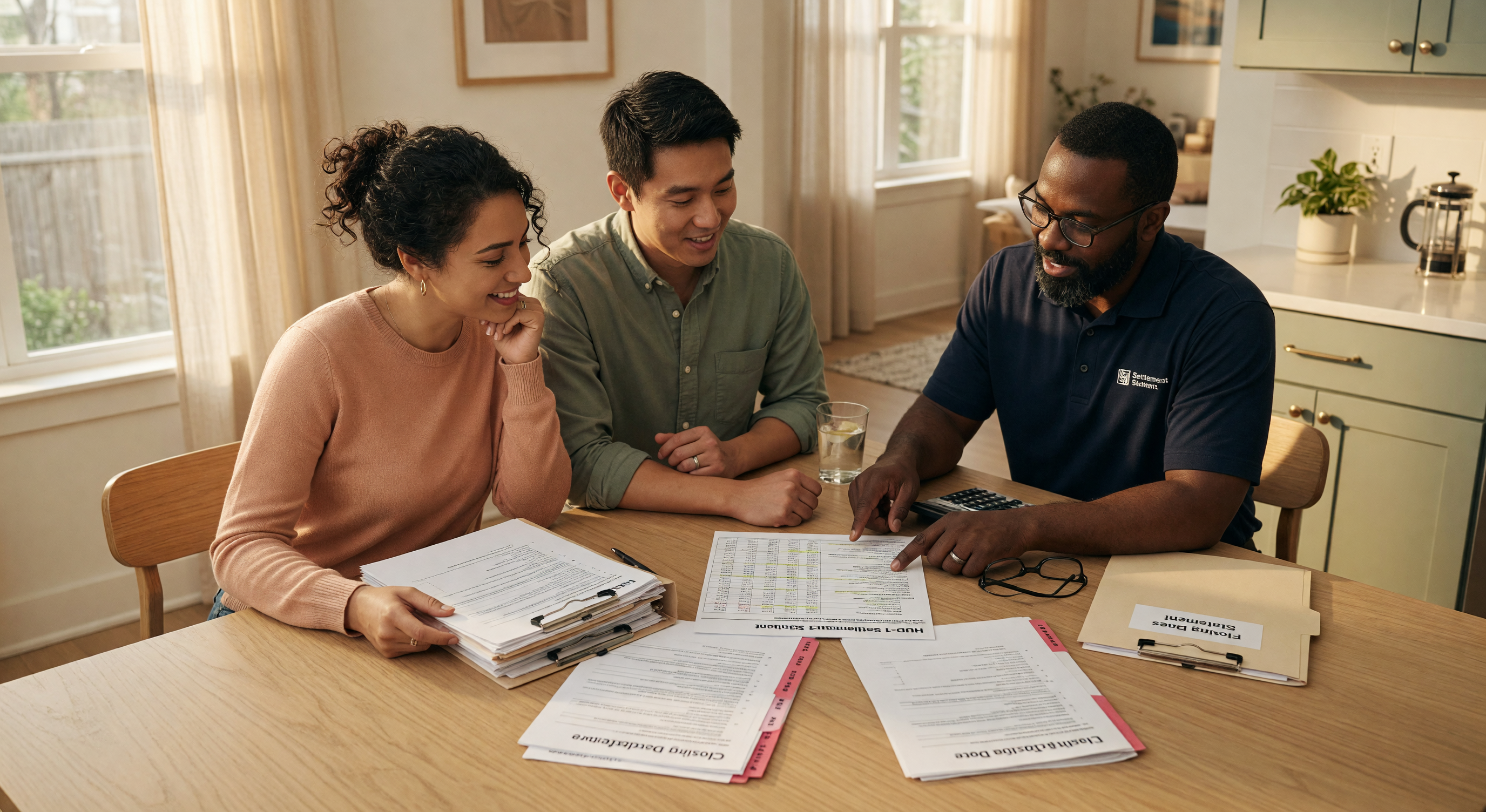
You have found the home, your offer has been accepted, and now you are staring at something called a "Closing Disclosure" that looks like it was written in another language. Closing costs are one of the most confusing parts of buying a home — and one of the most important to understand before you sign on the dotted line.
In Texas, buyers can generally expect closing costs between 2% and 5% of the purchase price. On a $275,000 home — roughly the San Antonio median right now — that translates to roughly $5,500 to $13,750. Some of these costs are fixed, some are negotiable, and some can be reduced entirely depending on how you structure your deal.
As a dual-licensed real estate agent and Mortgage Loan Officer (Texas License #794969, NMLS #2792614), I work on both sides of the closing table. That means I can walk you through every line item on your Closing Disclosure, explain what it means, and help you identify where there is room to negotiate. No surprise fees, no last-minute scrambling — just a clear picture of what you owe before you get to the table.
Let's break down every major closing cost category so you know exactly what to expect.
Title Insurance
Title insurance protects you and your lender against any defects in the title — think undiscovered liens, boundary disputes, or fraud. Texas is one of the few states where title insurance rates are set by the state, so you will not see wild price variation between title companies.
- Lender's title policy: Typically $200 to $250 for a standard policy. This is required by your lender and is usually the buyer's responsibility.
- Owner's title policy: In the San Antonio area, the seller customarily pays for the owner's policy — but this is negotiable, especially in a competitive market. An owner's policy can run $1,000 to $2,500 depending on the sale price.
A quick note for first-time buyers: always ask who is paying for which policy. This is one of the items we negotiate as part of your offer, and I make sure you are not caught off guard at closing.
Escrow and Settlement Fees
Escrow fees cover the work the title company or escrow agent does to prepare your closing — verifying the deed, managing funds, and coordinating between the buyer, seller, lender, and agents.
- Escrow/settlement fee: Typically $300 to $600, split between buyer and seller in most San Antonio transactions.
- Recording fees: A small government fee to record your new deed and mortgage — usually $50 to $150.
- Notary fee: If a mobile notary is needed for signing, expect $75 to $150.
These fees are relatively small compared to other closing costs, but they add up. I review the full settlement statement with every client to make sure nothing looks out of place.
Loan Origination and Lender Fees
This is where your mortgage lender charges for processing and underwriting your loan. These fees vary significantly between lenders, which is one reason I shop rates through Direct Rate USA to find the best terms for your situation.
- Origination fee: Often around 0.5% to 1% of the loan amount. On a $250,000 loan, that is roughly $1,250 to $2,500. Some lenders offer "no origination fee" loans but may charge a higher interest rate to offset the cost.
- Underwriting fee: A flat fee of $400 to $900 to cover the lender's risk assessment of your loan file.
- Credit report fee: Typically $25 to $50.
- Flood certification: Usually $15 to $25.
Here is what most buyers do not realize: as your MLO, I am not incentivized to pad these fees. My goal is to get you the lowest total cost of borrowing, which means comparing lender fees alongside interest rates — not just the rate alone.
Appraisal Fee
Your lender will require an appraisal to confirm the home's market value supports the loan amount. This protects you from overpaying and protects the lender from loaning more than the property is worth.
- Standard appraisal: $300 to $500 for a typical single-family home in the San Antonio metro.
- Rural or large-lot appraisal: Can run higher — $500 to $700+ — if the property is outside the city or on acreage.
The appraisal is almost always paid by the buyer upfront, and it is typically non-negotiable since the lender requires it. VA appraisals follow their own fee schedule set by the Department of Veterans Affairs.
Home Inspection
A home inspection is technically optional (but I never recommend skipping it). This is your chance to uncover hidden issues — foundation problems, roof damage, outdated electrical, plumbing leaks — before you commit to a six-figure purchase.
- General home inspection: $350 to $550 for a standard San Antonio home.
- Termite/pest inspection (WDI): $75 to $150. In Texas, this is customarily paid by the seller, but again, that is negotiable.
- Foundation inspection: An extra $150 to $300 — worth it in San Antonio, where expansive clay soil can cause foundation movement.
- Septic or well inspection: If the property has a septic system or private well, add $200 to $500.
The inspection fee is paid before closing (usually at the time of inspection), so it does not appear on your Closing Disclosure. But it is absolutely a cost you should budget for.
Property Taxes
Texas has no state income tax — but property taxes are among the highest in the nation. In the San Antonio area, property tax rates typically range from 1.8% to 2.6% of assessed value, depending on the county and taxing districts.
Here is what catches most buyers off guard: Texas property taxes are paid in arrears. That means the taxes you owe at closing are prorated from the first of the month through your closing date. Depending on when you close, this prorated amount can be a significant chunk of cash at the table.
- Prorated property taxes at closing: On a $275,000 home with a 2.2% tax rate, expect to prepay roughly $500 to $2,500 depending on your closing month.
- Escrow account setup: Most lenders require you to deposit 2 to 6 months of property taxes into an escrow account at closing — an additional $900 to $3,000 upfront.
I always show buyers the estimated monthly escrow payment alongside the principal and interest so you see the true monthly cost — not just the mortgage payment.
HOA Fees
If the home you are buying is in a homeowners association — which is common in many San Antonio, New Braunfels, and surrounding area communities — there will be HOA-related costs at closing.
- HOA transfer fee: Typically $200 to $500, paid to the HOA management company for transferring the account to your name.
- Capital contribution or initiation fee: Some HOAs charge a one-time fee of $200 to $1,000+ for new homeowners.
- Prorated HOA dues: You will owe a prorated share of the monthly or annual HOA dues from the date of closing.
Not all homes have an HOA, but when they do, the fees need to be factored into your total monthly housing cost. I always pull HOA documents during the option period so there are no surprises.
Prepaid Items
Prepaid items are advance payments your lender requires you to make at closing to establish your escrow account and cover the first few months of certain ongoing costs.
- Homeowners insurance: Your full first year's premium is due at closing — typically $1,500 to $3,000 per year in the San Antonio area, depending on the home's age, construction, and coverage level.
- Prepaid interest: Lenders collect per-diem interest from your closing date to the end of the month. At 6.25% on a $250,000 loan, that is roughly $22 to $42 per day.
- Escrow reserves: Many lenders require 2 to 6 months of property taxes and insurance to be deposited into escrow at closing — an additional $1,500 to $4,000.
- VA Funding Fee (VA loans only): This is a one-time fee ranging from 1.25% to 3.3% of the loan amount, which can be rolled into the loan. Veterans with service-connected disabilities may be exempt.
These prepaid items often represent the largest single portion of your closing costs. I break these down in plain English for every client before we get to the Closing Disclosure stage so you can plan accordingly.
A Sample Closing Cost Estimate for San Antonio
Here is what a realistic closing cost breakdown might look like for a $275,000 home in San Antonio with a conventional loan:
| Cost Category | Estimated Range |
|---|---|
| Lender's title insurance | $200 – $250 |
| Escrow / settlement fee | $300 – $600 |
| Loan origination + underwriting | $1,650 – $3,400 |
| Appraisal | $300 – $500 |
| Credit report + flood cert | $40 – $75 |
| Recording + notary fees | $125 – $300 |
| Prorated property taxes | $500 – $2,500 |
| Homeowners insurance (first year) | $1,500 – $3,000 |
| Escrow reserves | $1,500 – $4,000 |
| HOA transfer + prorated dues | $200 – $1,000 |
| Estimated total | $6,315 – $15,625 |
These numbers are estimates and will vary based on the specific property, your loan program, and the timing of your closing. The best way to get an accurate picture is to request a Loan Estimate from your lender — which I can provide within days of pre-approval.
Can You Reduce Your Closing Costs?
Yes — there are several legitimate ways to lower your out-of-pocket closing costs:
- Negotiate seller concessions: In Texas, you can ask the seller to contribute toward your closing costs — typically up to 3% to 6% of the sale price depending on your loan type. This is a common negotiation point, especially on homes that have been on the market for a while.
- Down payment assistance programs: Programs like TSAHC and the City of San Antonio's HIP program can cover part or all of your closing costs for qualifying buyers.
- Lender credits: Some lenders offer credits toward closing costs in exchange for a slightly higher interest rate. This can help if you are cash-tight at closing — but you pay more over the life of the loan.
- Compare lender fees: This is where having an MLO on your team pays off. I can break down the total cost of borrowing — fees and interest — so you are not comparing apples to oranges.
How Jonathan Helps You See the Full Picture
Most buyers find out their closing costs three days before closing, buried in a Closing Disclosure they have never seen before. That is too late to adjust anything.
Because I am dual-licensed as both your real estate agent and your Mortgage Loan Officer, I can:
- Provide a Loan Estimate early in the process so you know your approximate closing costs before you even make an offer.
- Negotiate seller concessions strategically on your behalf — targeting the costs that make the biggest impact.
- Shop real-time rates through Direct Rate USA to minimize origination fees and find the lowest total borrowing cost.
- Walk you through your Closing Disclosure line by line so every dollar makes sense before you sign.
There is no referral chain, no handoff to a lender who does not know you, and no guessing about who to call when you have a question. Your financing and your real estate are handled together — from pre-approval to keys in hand.
Frequently Asked Questions
How much are closing costs in Texas?
In Texas, closing costs typically run 2% to 5% of the purchase price. On a $275,000 home, expect roughly $5,500 to $13,750 in total buyer-paid closing costs, depending on your loan type and the timing of your closing.
How much do I need for down payment and closing costs combined?
On a VA loan with $0 down, you still need funds for closing costs — typically $5,000 to $10,000. On a conventional loan with 3% down on a $275,000 home, your down payment is $8,250 plus closing costs of roughly $5,500 to $12,000, putting your total cash to close in the $14,000 to $20,000 range. Down payment assistance can significantly reduce these numbers.
Can the seller pay my closing costs?
Yes. In Texas, sellers can contribute toward buyer closing costs — typically up to 3% for conventional loans and up to 4% for VA loans. This is something I negotiate as part of your offer strategy.
What are prepaids, and why are they so expensive?
Prepaids are advance payments your lender requires for homeowners insurance and property taxes, deposited into an escrow account. In Texas, where property taxes are high and insurance costs have risen, prepaids can represent a significant portion of your total closing costs — often $3,000 to $7,000.
Do VA buyers pay closing costs?
VA buyers have some of the lowest closing costs because VA loans do not require PMI, and the VA Funding Fee can be rolled into the loan. However, VA buyers still pay for appraisal, title insurance, and prepaid items. The VA also limits what lenders can charge in certain fee categories.
What is the difference between the Loan Estimate and the Closing Disclosure?
The Loan Estimate is provided within three business days of applying for a mortgage and gives you an early picture of your expected closing costs. The Closing Disclosure is the final version, delivered at least three business days before closing, with exact numbers. By the time you see the Closing Disclosure, most costs should match what was on the Loan Estimate.
Ready to Understand Your Full Financial Picture?
Closing costs do not have to be a mystery. Whether you are a first-time buyer trying to figure out how much cash you need or a military family PCSing to JBSA and trying to maximize your VA benefits, I can give you a clear, honest breakdown before you even start house hunting.
Talk Soon.