
Investing in San Antonio Rental Properties: What You Need to Know in 2026
Last updated:
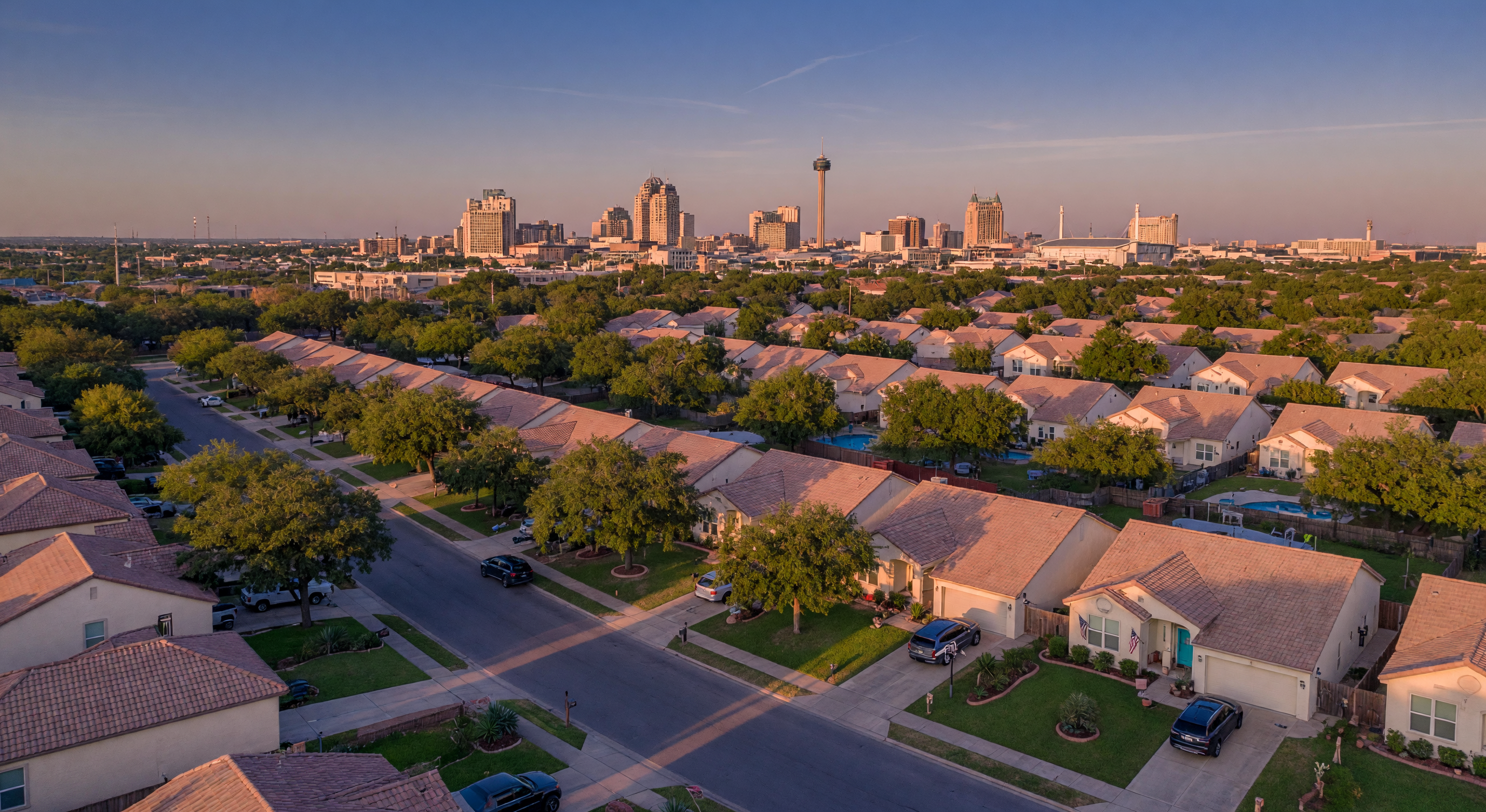
San Antonio has quietly become one of the most compelling rental markets in Texas for real estate investors. The metro area now exceeds 2.5 million residents, population growth continues at more than 1.2% annually, and median rents sit comfortably between $1,544 and $1,615 per month — all while home prices remain significantly lower than Austin, Dallas, or Houston. Whether you are a first-time investor buying your first rental property or a seasoned investor expanding your portfolio, San Antonio offers a combination of affordability, tenant demand, and yield that is hard to match. This guide walks you through everything you need to know before investing in San Antonio rental properties in 2026.
Why San Antonio Is a Top Market for Rental Income
The fundamentals driving San Antonio’s rental market are structural, not temporary. Three forces in particular make this city attractive for long-term buy-and-hold investors:
Military Presence Drives Consistent Tenant Demand
Joint Base San Antonio (JBSA) is the largest unified military installation in the United States, comprising Fort Sam Houston, Lackland Air Force Base, and Randolph Air Force Base. Tens of thousands of active-duty service members and their families cycle through the area every year on PCS (Permanent Change of Station) orders. These families need housing — and they need it fast. Military tenants are generally reliable, income-stable renters whose housing costs are subsidized by Basic Allowance for Housing (BAH), which effectively underwrites your rent. In 2026, BAH rates for the San Antonio area provide comfortable coverage for single-family rentals in the $1,400–$2,000 range depending on rank and dependents.
For investors, this creates a built-in tenant pipeline that does not depend on job market fluctuations the way civilian demand does. When a service member PCSes into JBSA, they need a home within weeks — and they are often looking in the neighborhoods near base.
Growing Population and University Tenants
Beyond the military, San Antonio’s population growth is fueled by a diversified economy in healthcare, cybersecurity, aerospace, and tourism. The city is home to multiple universities and colleges — including UTSA (one of the fastest-growing universities in Texas), UIW, Trinity University, and San Antonio College — which create steady demand for smaller rental units and shared housing near campus. The San Antonio metro added roughly 30,000–40,000 new residents annually in recent years, and that trend shows no sign of slowing.
This population growth translates directly into rental demand. New arrivals need time to explore the market before buying, and many choose to rent for one to two years first. That turnover keeps the rental market active and keeps vacancy rates manageable.
Affordable Entry Points With Strong Cap Rates
One of the biggest advantages of investing in San Antonio compared to other Sun Belt markets is the purchase price relative to rental income. Investors in San Antonio typically target cap rates between 6% and 8% for single-family rentals, which is meaningfully higher than markets like Austin (3%–5%) or Dallas (4%–6%). The median home price in San Antonio sits around $280,000 to $310,000, but investment properties in strong rental corridors can be found in the low $200,000s. That lower barrier to entry means you can acquire cash-flowing properties without the massive capital outlay required in higher-priced metros.
What Cap Rates Can You Expect in 2026?
Cap rate — the ratio of net operating income to property value — is the single most important number for rental investors. Here is a realistic snapshot of what to expect in San Antonio by property type:
Single-Family Homes (Long-Term Rental)
Typical cap rates of 6%–8% in established rental neighborhoods. Median purchase prices of $220,000–$310,000 with monthly rents of $1,500–$2,000. The sweet spot for most individual investors.
Multi-Family (Duplexes / Fourplexes)
Cap rates can reach 7%–9% depending on condition and location. These properties are harder to find but offer excellent cash flow, especially near JBSA where multi-family demand from military families is strong.
Short-Term Rentals (Airbnb / VRBO)
Potential gross yields of 10%–14% in tourist-friendly areas near downtown, the River Walk, or the Pearl District, but these require more active management, permitting, and compliance with city ordinances (more on this below).
Remember: cap rate is not cash-on-cash return. Your actual return depends on your financing terms, down payment, vacancy rate, maintenance costs, and property management fees. A property that looks great on paper can underperform if it sits vacant for two months or requires a $15,000 roof replacement in year two. Always underwrite conservatively.
Best Neighborhoods for Rental Properties in San Antonio
Location is everything in real estate investing — and it is especially true for rentals. The best rental neighborhoods balance affordable purchase prices, strong tenant demand, low vacancy rates, and proximity to the employers and amenities that draw renters. Here are the neighborhoods we recommend for different investor profiles:
Converse & Universal City
Adjacent to JBSA-Randolph, these communities are a magnet for military tenants on PCS orders. Median home prices of $230,000–$280,000 with rents of $1,400–$1,700. Strong cap rates and very low vacancy for well-priced rentals. SCUCISD schools are a draw for families with children.
Schertz & Cibolo
A step up in home quality and price ($250,000–$320,000) but still delivers solid cap rates of 5.5%–7%. Strong demand from military families and growing families who want SCUCISD schools. Low crime rates and easy I-35 access to downtown.
South Side / Brooks Area
One of the most affordable entry points in the metro, with homes in the low $200,000s and rents of $1,200–$1,500. The Brooks development is bringing retail, dining, and jobs, which lifts surrounding property values and rental demand. A strong long-term play.
Tobin Hill & Southtown
Urban, walkable neighborhoods near downtown that attract young professionals, medical workers (Baptist Health System, University Hospital), and students. Higher rents per square foot but higher purchase prices. Best for investors targeting tenant quality over raw cap rate.
Stone Oak & North Central
Established, family-friendly area with NEISD schools. Median prices of $280,000–$350,000 with rents of $1,700–$2,200. Lower cap rates but excellent tenant quality, low turnover, and strong long-term appreciation. A conservative, stable investment area.
East Side / Windcrest
Windcrest is its own incorporated city within San Antonio, with lower property tax rates and median home prices of $210,000–$260,000. Strong cap rates and proximity to JBSA-Randolph make this an attractive option for military-focused investors.
Property Management Tips for San Antonio Investors
Owning a rental property is one thing. Managing it well is another. Whether you self-manage or hire a property management company, these tips will help you protect your investment and maximize returns:
1. Screen Tenants Thoroughly
In San Antonio’s active rental market, you will likely receive multiple applications. Do not rush. Run credit checks, verify employment and income (aim for rent-to-income ratios of 3:1 or better), contact previous landlords, and check for eviction history. Military tenants often have stable income verified through LES (Leave and Earnings Statement) documents, which makes screening straightforward.
2. Price Your Rental Competitively
Overpricing leads to vacancy. Vacancy is the enemy of cash flow. Research comparable rentals on Zillow, Rentometer, and the MLS before listing your property. If you are getting no calls in the first week, your price is likely too high. A well-priced rental in a desirable San Antonio neighborhood should generate inquiries within days.
3. Budget for Maintenance and Turnover
A good rule of thumb is to budget 1% of the property’s value annually for maintenance and repairs. On a $250,000 home, that means setting aside roughly $2,500 per year. Texas weather is hard on properties — intense heat, occasional hail, and the constant threat of plumbing issues from shifting clay soil. Have a reliable plumber, HVAC tech, and handyman on speed dial.
4. Consider Professional Property Management
If you do not live near your rental property or you own multiple units, a property management company is worth the cost. In San Antonio, typical management fees run 8%–10% of monthly rent plus a placement fee of 50%–100% of one month’s rent for new tenants. They handle leasing, tenant communication, maintenance coordination, rent collection, and eviction proceedings if necessary. For out-of-state investors or busy professionals, this is often the difference between a successful investment and a headache.
5. Protect Yourself With the Right Insurance
Standard homeowner’s insurance does not cover rental properties. You need a landlord insurance policy that covers liability, loss of rental income, and property damage. If you plan to offer your property as a short-term rental, you will need a separate STR policy or endorsement. In Texas, flood insurance is also worth considering, especially for properties near creeks or in flood-prone zones — many parts of San Antonio are in FEMA flood zones that require separate coverage.
Short-Term Rental Rules in San Antonio
Short-term rentals (STRs) — properties rented for fewer than 30 consecutive days — have become a popular investment strategy in San Antonio, particularly near downtown, the River Walk, the Pearl District, and other tourist destinations. But the regulatory environment has tightened, and investors need to understand the rules before purchasing an STR property.
Permit Requirements
As of 2026, all short-term rental operators within San Antonio city limits are required to obtain a permit through the Development Services Department. Following ordinance amendments in June 2024, permit fees are:
- Type 1 (Owner-Occupied): $300 for a triennial (three-year) permit. You must reside at the property for at least six months of the year.
- Type 2 (Non-Owner-Occupied): $450 for a triennial permit. These properties are dedicated full-time to short-term rentals.
Application Requirements
To obtain an STR permit, you will need to provide proof of property insurance, a floor plan with evacuation routes, a parking plan, and designation of a local responsible party who can be on-site within one hour if needed. Permits are non-transferable, meaning if you sell the property, the new owner must apply for their own permit.
Tax Obligations
STR operators must register for Hotel Occupancy Tax (HOT) with the City of San Antonio and file and remit taxes monthly. The combined HOT rate in San Antonio is 16.75% (city + county + state). Major platforms like Airbnb and VRBO are required to collect and remit this tax on behalf of hosts in many cases, but you should verify your specific situation with a tax professional.
What This Means for Investors
STRs in San Antonio can generate strong income — particularly in high-traffic areas near downtown — but the regulatory and tax requirements are real. If you are considering an STR investment, work with a team that understands both the real estate and the compliance side. At Velvet Realty Group, we help investors evaluate whether a property makes sense as a long-term rental, short-term rental, or both, and we connect you with the local resources you need to stay compliant.
Financing Your San Antonio Rental Property
Financing an investment property works differently than financing a primary residence. Here is what to expect in 2026:
Conventional Investment Property Loans
Most lenders require a 15%–25% down payment for investment properties, compared to 3%–5% for a primary residence. Interest rates on investment property loans are typically 0.5%–1% higher than owner-occupied rates. Expect credit score requirements of 720+ for the best terms, though some lenders will work with scores as low as 660.
DSCR Loans
Debt Service Coverage Ratio (DSCR) loans have become increasingly popular for investors. Instead of qualifying based on your personal income and tax returns, the lender qualifies the property based on its rental income. If the property’s net rental income covers the mortgage payment (typically a DSCR of 1.0 or higher), you can qualify. This is especially useful for self-employed investors or those with complex tax situations.
VA Loans for Rental Properties
Here is something many military investors do not realize: you can use a VA loan to purchase a multi-family property (up to four units) as long as you live in one unit as your primary residence. After living in it for a required period (typically 12 months), you can convert the entire property to a rental and use your VA loan benefit to purchase your next primary residence. This is one of the most powerful wealth-building strategies available to military investors, and Jonathan can walk you through exactly how it works as both a licensed agent and Mortgage Loan Officer (NMLS #2792614).
How Velvet Realty Group Supports Real Estate Investors
At Velvet Realty Group, we work with investors across the spectrum — from first-time landlords buying their first duplex to experienced investors scaling their portfolios. Here is what sets us apart:
- Dual-Licensed Expertise: Jonathan holds both a real estate license (#794969) and is a Mortgage Loan Officer (NMLS #2792614). That means we can help you evaluate the investment, run the numbers, and secure financing — all under one roof. No miscommunication between separate professionals.
- Market-Specific Knowledge: We live and work in the San Antonio area. We know which neighborhoods are appreciating, which ones have strong rental demand, and which ones to avoid. That local insight is the difference between a good investment and a great one.
- Military Investor Specialists: With JBSA as the largest military installation in the U.S., we understand the unique opportunities available to military investors — from VA loan multi-family strategies to targeting PCS-driven rental demand.
- Honest Guidance: We will tell you when a property does not make sense as an investment. Our goal is not to close a deal — it is to help you build wealth through smart real estate decisions.
Frequently Asked Questions
What is a good cap rate for a rental property in San Antonio?
A cap rate of 6%–8% is considered strong for single-family rentals in San Antonio. Higher cap rates (7%–9%) are possible in more affordable neighborhoods closer to JBSA, while established areas like Stone Oak may offer 5%–6% with stronger appreciation potential and tenant quality.
How much do I need for a down payment on an investment property?
Conventional investment property loans typically require 15%–25% down. DSCR loans may have similar requirements. VA loans allow 0% down on multi-unit properties (up to four units) as long as you occupy one unit as your primary residence. FHA loans can also be used for multi-family properties with 3.5% down if you live in one unit.
Are short-term rentals allowed in San Antonio?
Yes, but you must obtain a permit from the City of San Antonio’s Development Services Department. Type 1 (owner-occupied) permits cost $300 for three years. Type 2 (non-owner-occupied) permits cost $450 for three years. You must also register for Hotel Occupancy Tax and remit 16.75% monthly. Platforms like Airbnb are required to remove listings without valid permit numbers.
What neighborhoods are best for rental property investment near military bases?
Converse, Universal City, Schertz, Cibolo, and Windcrest are the top neighborhoods for investors targeting military tenants. All are within a short commute of JBSA-Randolph, offer median home prices well below the metro average, and have strong demand from PCS families looking for single-family rentals.
Can I use a VA loan to buy a rental property?
You cannot use a VA loan to buy a property you intend to rent out entirely. However, you can use a VA loan to purchase a multi-family property (up to four units) and live in one unit. After the required occupancy period (typically 12 months), you can convert the entire property to a rental and purchase your next home. This is one of the best wealth-building strategies available to military service members and veterans.
Ready to explore investment opportunities in San Antonio?
Whether you are a first-time investor or expanding your portfolio, we will help you find the right property, run the numbers honestly, and guide you from acquisition through tenant placement. Real estate, without the performance.